Return to Kindah (A Story from a Maroons of Accompong)
- Norma Edwards-Rowe
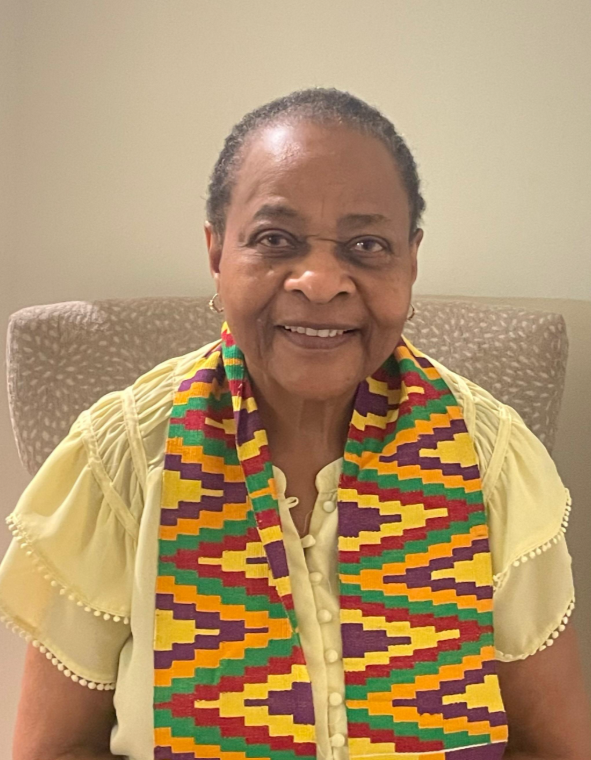
- May 1
- 4 min read
What a treaty signed in 1738 still has to teach us about freedom, community, and the urgency of now
January 6th — Accompong Day

Dear reader,
History was never my favorite subject. But there are dates that refuse to stay on a page dates that reach out of textbooks and wrap themselves around something living inside you. The year 1504 is one of them.
That was the year the Spanish Crown granted permission for the importation of enslaved Africans to the Caribbean, to North and Central America, to parts of Europe. A permission slip for human suffering, issued in the name of one thing and one thing only: trade. The economy of a nation. Spain's economy. And let us be honest with ourselves, dear reader, because history demands it: Africans were not only the enslaved. Some participated in the selling and kidnapping of their own communities. This is the complexity we must hold not to excuse, but to understand. Power will always find people willing to serve it. That has never been the whole story. And neither has bondage.
Freedom was never elusive. It was always the urgency of now.
Because 234 years after that permission was granted, something extraordinary happened. In 1738, two sovereign nations sat across from one another and signed a treaty. On one side: the British Empire, with its armies and its ambitions. On the other: the Africans of Accompong, with something the British could not manufacture unity forged in fire, wisdom passed through blood, and a will that no chain had ever managed to break.
A new nation was born that day. Not from a king's decree. Not from a conquistador's claim. But from a people who had looked at the mountains of Jamaica and said: this is ours. We will live here. We will be free.
I want you to sit with that for a moment, dear reader. Really sit with it.
These were people who had been classified as property. Who had survived the Middle Passage, the plantations, the violence of a system designed to strip them of everything language, name, land, lineage. And yet. And yet. They did not simply survive. They organized. They strategized. They chose leaders not just for their strength in battle but for their spiritual clarity. They built something that outlasted empires.
Captain Kojo sometimes called Town Master stands at the center of Kindah to this day. And beside him: Nanny, his spiritual leader, whose vision was not confined to what the eye could see. Together they understood something that too many of us have forgotten: unity is power. Discipline is freedom. Sovereignty is not a symbol it is a lived, daily, breathing truth.
Community is not simply who lives beside you. It is who remembers you, who prays for you, who teaches you, who challenges you and who heals you.
That is the Accompong inheritance. And it is yours, dear reader, whether or not you have ever set foot on that mountainside. Because what they built was not just a village. It was a definition. A definition of what it means to be free not as the absence of oppression, but as the presence of people who will stand with you in the hard moments. In birth. In sickness. In conflict and reconciliation. In grief. In joy. In the ordinary Tuesday that no history book will record.
Heritage is not a museum exhibit. Culture is not a costume. It is the stories retold at the table. The names that get passed down. The songs that come to your lips when words fail you. It is the thing that remains when everything else is stripped away.
Every January 6th, the people return to Accompong. They have been doing so, in one form or another, since the treaty was signed nearly three centuries ago. They march. They sing. "Clear road, oh! Maroon law hol, oh!" And those words are not a relic. They are a living instruction. We are still clearing the road. We are still making law. We are still deciding, together, what freedom actually looks like when it belongs to us.
The story of Accompong is not a footnote. It is a model. A proof of concept. A reminder for anyone who has ever been told that their people did not resist, that their ancestors did not fight, that freedom was something given rather than something seized that the record tells a different story. A better one.
True freedom is not the absence of struggle. It is the presence of solidarity.
The choices we make today must honor the sacrifices of those who came before. Not out of obligation. Not out of guilt. But because when you understand where you come from really understand it you walk differently. You stand differently. You reach for your people differently.
So, dear reader, wherever you find yourself whether you have been to Accompong or you are only now learning her name, I invite you to return. To return to Kindah is to return to the memory of what solidarity looks like when it is chosen on purpose. To return to Kindah is to return to yourself.
Walk forward with intention.
Walk forward with memory.
Walk forward with pride.
Maroons of Accompong
Comments